Statement Lighting as a Hotel Brand Anchor: Why Custom Art Chandeliers Are Defining 2026 Hospitality Design

Walk into a newly opened luxury hotel in 2026 and the first thing guests photograph is rarely the reception desk. It is the light: a single oversized sculptural installation above the lobby, a cloud of hand-blown glass over the restaurant, or a ribbon of brass and crystal following the staircase. Statement lighting has become the most efficient way for a hotel to build a visual identity, and it is reshaping how designers, operators and lighting factories approach custom orders. For buyers, understanding this trend is the first step toward specifying fixtures that earn their cost.
From Fixture to Focal Point: The Shift to Sculptural Lighting
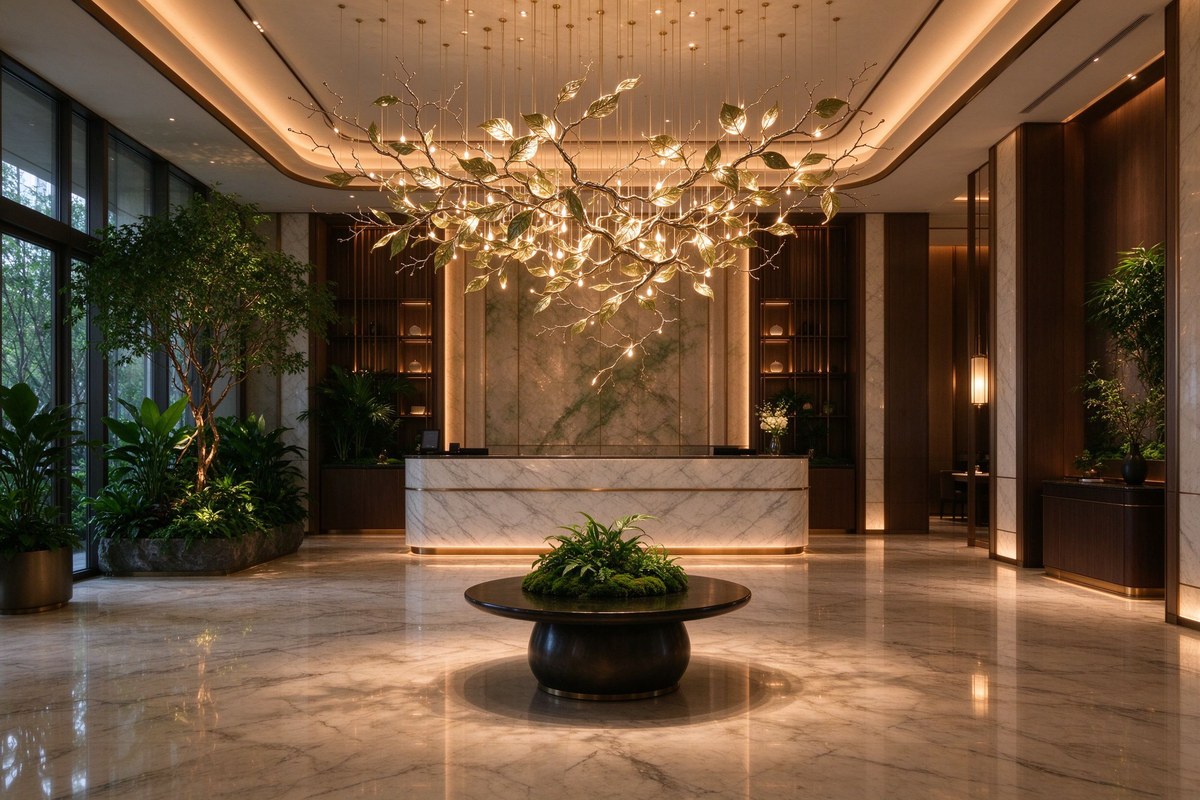
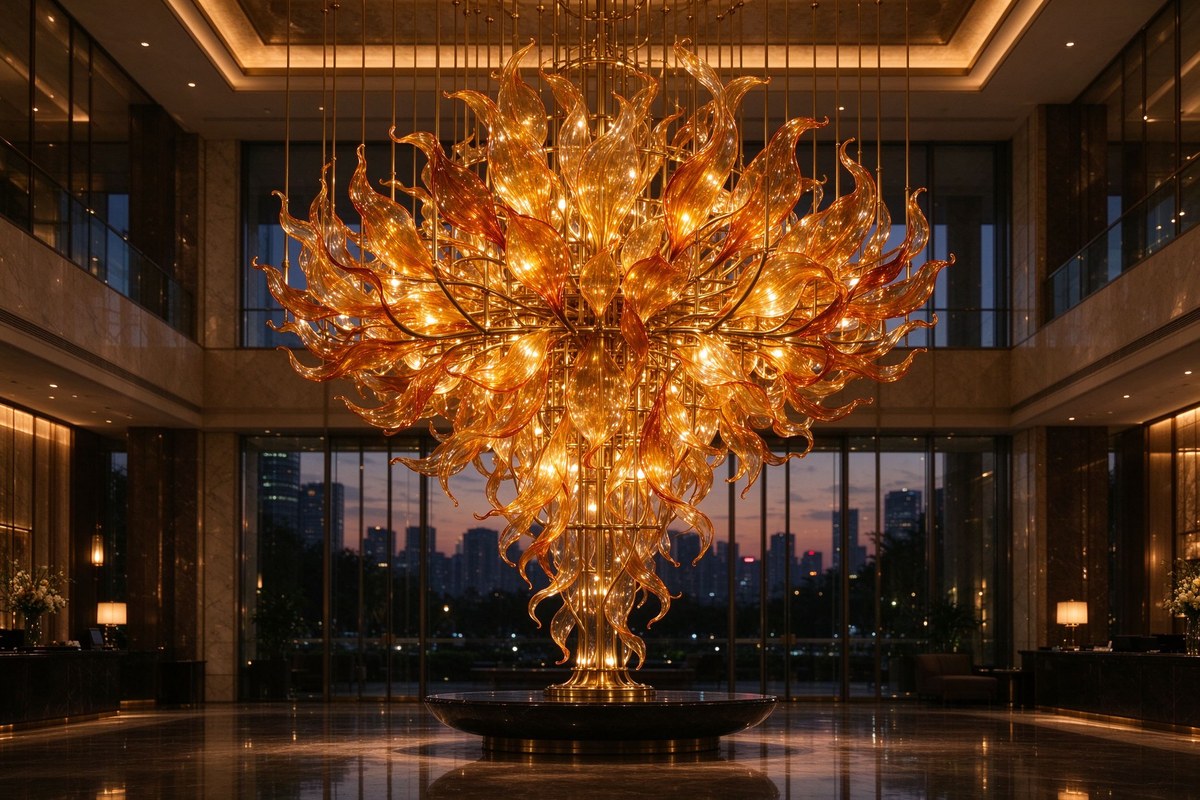
For years, hotel lighting was specified in layers: recessed downlights for general brightness, concealed LEDs for coves and a few decorative fixtures as decoration. In 2026 the hierarchy has inverted, and designers now start a space from one sculptural piece, building the ambient layers around it. Ring forms, organic leaf and petal structures, clustered globes and ribbon-like installations dominate new openings, with warm brass, matte black and brushed bronze as the most requested finishes. These pieces are not chosen from a catalogue; they are developed as artworks sized to the room, and the lighting factory is brought into the design conversation far earlier than before.

Why One Statement Piece Often Outperforms a Grid of Downlights
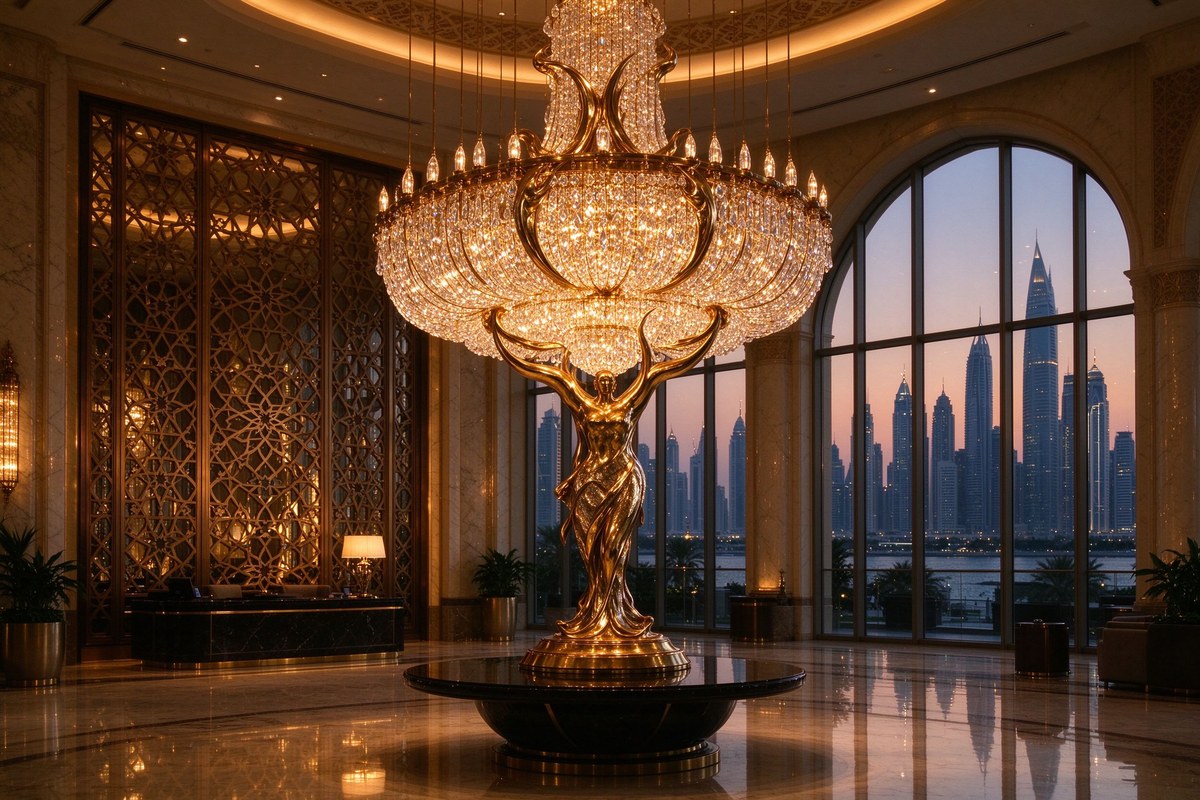
The trend is driven by more than aesthetics. A single large pendant or chandelier can replace a dense field of recessed downlights in a double-height lobby, reducing ceiling penetrations, shortening the installation schedule and simplifying maintenance. Visually, one scaled fixture reads as deliberate and memorable, while a uniform grid of spots reads as generic. The fixture also carries the brand: a coastal resort can specify shell-like glass forms, a city hotel can use angular metal mesh, and the same language repeats at smaller scale in corridors and suites, giving guests a coherent identity before they read the signage.

Building a Lighting Narrative Across Lobbies, Restaurants and Staircases
The strongest projects do not treat the lobby chandelier as an isolated purchase. They build a narrative across zones: the grand installation anchors the arrival, lower clusters define the restaurant and bar, and matching wall sconces and pendants carry the same material into corridors and guest rooms. Scale is the critical discipline: in a double or triple-height void, the fixture must be proportioned to read from both the ground floor and the upper landings, with weight and fixing points engineered before the ceiling is built. This is why custom factories increasingly receive architectural drawings and structural loads at the quotation stage rather than after the interior is finished.

The Shareable Return: Light as Measurable Social Media Value
Operators now treat statement lighting as a marketing asset with measurable returns. A lobby designed around a photogenic installation encourages guests to photograph and tag the property, and renovated hotels report meaningful increases in social media tags and dwell time near the piece. The economics are straightforward: one bespoke chandelier often costs less than a multi-year digital campaign, yet it appears in thousands of guest photos that circulate for the life of the property, which is why designers now treat it as an investment rather than a discretionary luxury.

What Buyers Should Specify: Materials, Scale, Dimming and Lead Time
A successful statement piece depends on the right brief. Buyers should confirm the ceiling height, structural fixing capacity and weight budget early; specify the visual language, materials and finish with samples; and define the light source, including colour temperature, CRI and whether the fixture must support 0-10V, DALI, TRIAC or wireless dimming down to a low level without flicker. Warm, dimmable light around 2700K remains the hospitality default, while smart scene control is now a baseline expectation. Because custom art installations are engineered, prototyped and made to order, lead times of five to seven weeks are normal, and early involvement of the factory protects the opening schedule.

R&C Deco Lighting is a custom decorative lighting factory based in Zhongshan, China. We manufacture bespoke chandeliers, wall sconces and statement installations for hotels worldwide. Our in-house team manages the full process from design review and prototyping to production, quality control and export packaging, with certifications including ISO 9001, CE, UL, ETL and SAA; MOQ starts at one piece and production takes 35 to 45 days.
If you are a trade customer and interested in R&C products please contact us:
If the lights you are looking for is not on my scope, Need to bespoke design. Please contact our salesman and I will email you back within 24 hours. For further information please email me on: http://www.rcdecolighting.com/contact-us.html or call me on : +86 13822380843
Biophilic Lighting in Hotels How Nature-Inspired Fixtures Are Reshaping Hospitality Interiors
Circadian Lighting in Hotels: How Human-Centric Light Is Reshaping Guest Rooms

Follow us
For more information about our non-standard lighting customizations, please contact us, simply fill in your details below and let us keep you up to date with the latest product letters with quotes, news, events and stories.
E-mail:
WhatsApp:
+86 138 2238 0843
Wechat:
+86 130 0550 5776
Address:
5 Xinmao Industrial Avenue, Zhongshan City, Guangdong Province, China
(R&C DECO LIGHTING)
Subscribe the newsletter