EU Compliance and Bespoke Hotel Lighting - What Buyers Must Verify in 2026
Why ESPR and EPREL Now Shape Hotel Lighting Orders
The regulatory frame around decorative lighting changed decisively. Regulation (EU) 2019/2020 on ecodesign for light sources and (EU) 2019/2015 on energy labelling have applied since September 2021, and every mains powered luminaire placed on the European market needs a registered light source behind it. For hotel projects this is not abstract paperwork. An unregistered fixture can be held at customs, and a branded project can reject a delivery at site even when the goods are correct.
The next layer is ESPR, the Ecodesign for Sustainable Products Regulation that replaced the old ErP framework in July 2024. Large enterprises fall under its general obligations from July 2026, with product specific delegated acts following. Decorative lighting sits inside that scope because a fixture combines electronics, metalwork, glass and replaceable components, which is exactly the profile the regulation wants documented across the life cycle.

What EPREL Registration Actually Requires
EPREL is the European Product Registry for Energy Labelling. Registration is filed by the supplier, or through an authorised representative inside the EU for non European manufacturers, and it produces the QR linked record that customs and market surveillance read. The technical file behind that record must remain available for ten years, covering photometric output, flicker metrics, lumen maintenance, power factor, chroma consistency and the declaration of conformity.
For bespoke work the issue is that a custom chandelier is rarely a single catalogue item. A forty light installation may mix lamp types, drivers and dimming protocols, so each replaceable light source needs its own registration while the luminaire carries the assembly data. Buyers who request the EPREL numbers at quotation stage avoid the scramble that lands in the final fortnight before handover.

Digital Product Passports and Long Life Projects
ESPR introduces the digital product passport, a scannable record holding material composition, carbon footprint, repair instructions and compliance evidence. The Commission is building a central registry, and once delegated acts land for a product group, the passport becomes the border reference document. Lighting is not in the first wave, but the direction is clear enough that specifiers should ask suppliers how such a record will be populated.
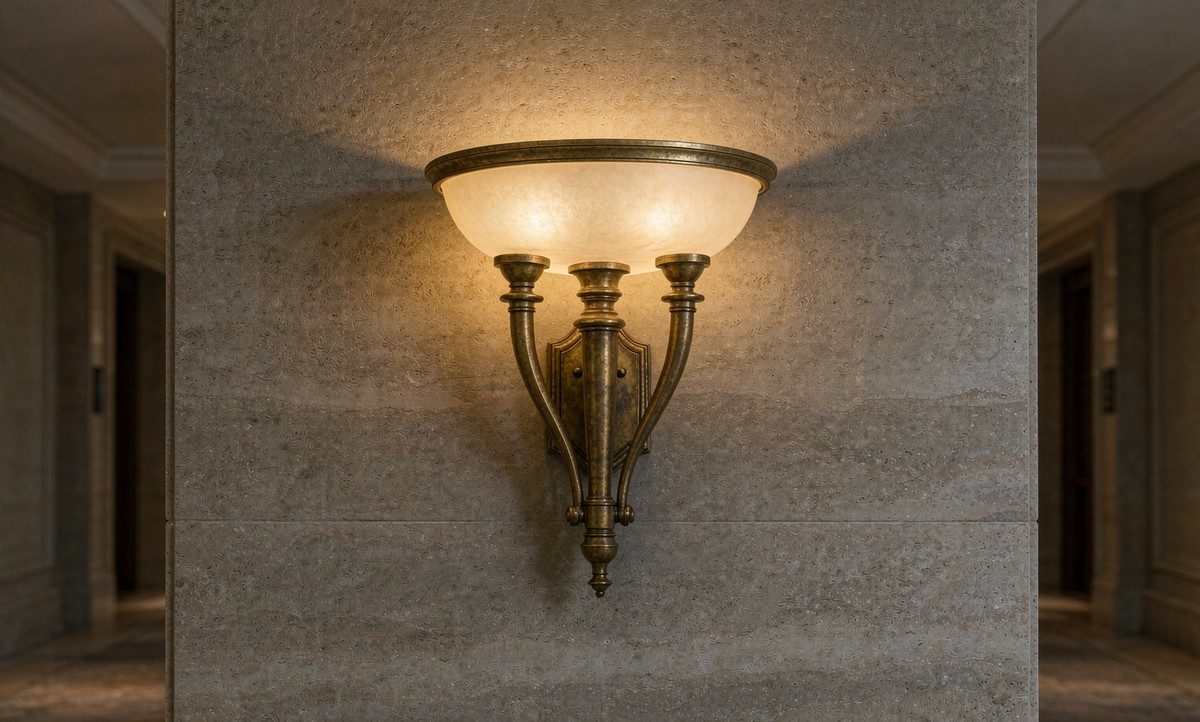
Hotels are exposed here because decorative lighting must survive a decade of operation. A wall sconce specified in 2026 may still be in service when a 2034 refurbishment asks for matching spares. If the supplier cannot produce a component list, glass specification and driver reference, the operator either re lights a whole floor or accepts a visible mismatch in the areas guests notice most.
Certification Stacks Buyers Should Confirm Early
A credible export file for decorative lighting is layered rather than singular. ISO 9001 covers the process, CE covers the European route, UL or ETL is normally required for North American projects, and SAA applies to Australia. Each scheme implies a different test regime and factory audit, so a supplier holding only one cannot simply add the others at the end of a purchase order.
The practical test is to ask for certificates with the exact product family listed, not a generic factory approval. A chandelier with an integral driver carries different risks from a pendant with an external supply, and the safety file must reflect the version shipped. Buyers who verify this before tooling begins rarely find a certification gap at pre shipment inspection, when the schedule has no room to absorb it.

Planning Lead Times Around Compliance Documentation
Compliance work runs in parallel with production, not after it. Sample approval, photometric testing and registration paperwork typically need three to five weeks, which fits a normal 35 to 45 day manufacturing window only if it starts with the metalwork. Projects that sequence documentation after production usually lose two to three weeks at the port, and that loss is rarely recoverable on a fixed opening date.
The workable pattern is to lock the light source schedule at design development, confirm the certification route before the deposit, and ask the factory to release registration numbers with the shipping documents. That rhythm keeps a custom installation on programme without turning the last week before opening into a documentation exercise, and it gives the operator a complete technical file from day one of the warranty.

If you are a trade customer and interested in R&C products please contact us:
If the lights you are looking for is not on my scope, Need to bespoke design. Please contact our salesman and I will email you back within 24 hours. For further information please email me on: http://www.rcdecolighting.com/contact-us.html or call me on : +86 13822380843
Biophilic Lighting in Hotels How Nature-Inspired Fixtures Are Reshaping Hospitality Interiors


Follow us
For more information about our non-standard lighting customizations, please contact us, simply fill in your details below and let us keep you up to date with the latest product letters with quotes, news, events and stories.
E-mail:
WhatsApp:
+86 138 2238 0843
Wechat:
+86 130 0550 5776
Address:
5 Xinmao Industrial Avenue, Zhongshan City, Guangdong Province, China
(R&C DECO LIGHTING)
Subscribe the newsletter