
Hand Formed Glass Shades - The Craft Behind Bespoke Hotel Chandeliers

Why Hand Formed Glass Defines Premium Hotel Lighting Projects
Designers keep returning to one material when a lobby installation must feel genuinely bespoke: hand formed glass. Unlike pressed or machine molded shades, each hand formed piece carries subtle variations in thickness, transparency and texture that catch light in ways no two fixtures repeat. For hotel brands competing on atmosphere, that individuality is now a specification requirement rather than a luxury.
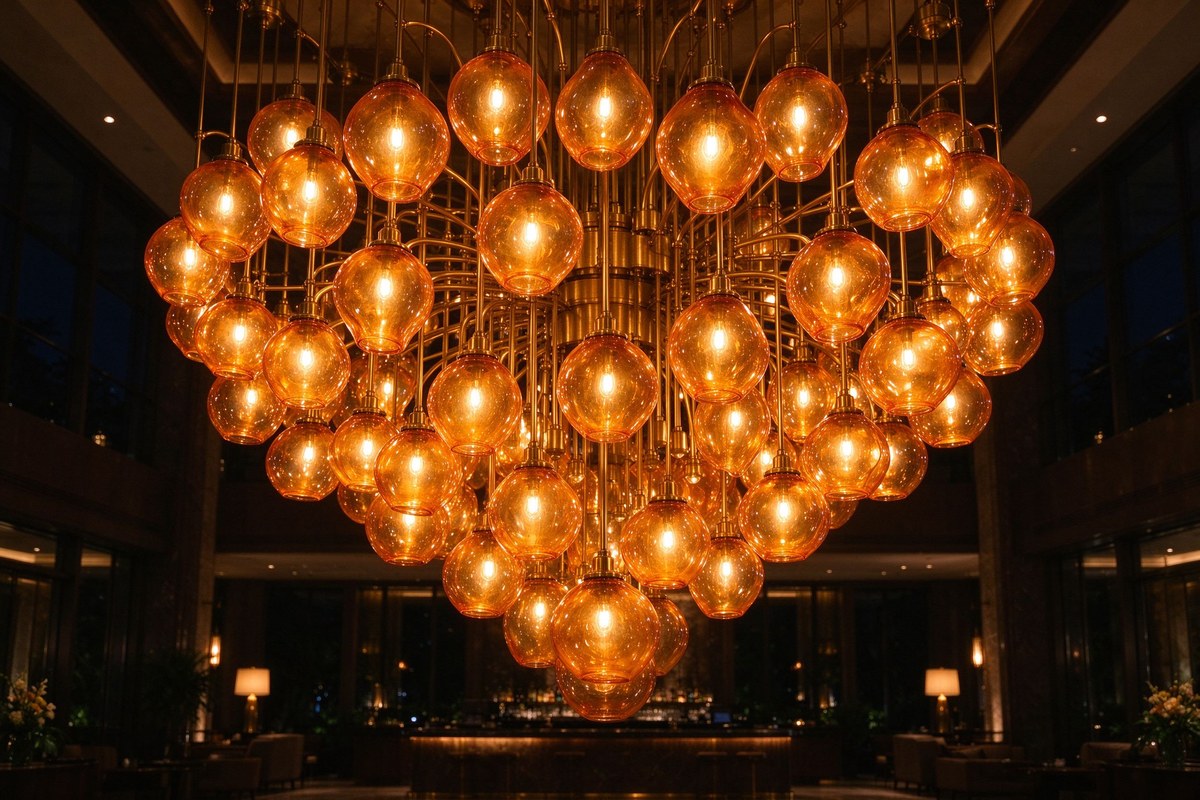
The commercial logic is simple. A signature chandelier built from dozens of individually formed glass elements becomes the visual anchor guests photograph and remember. Because every element is made for the project, manufacturers can match the curve of a stairwell, the height of an atrium or the interior colour palette, which is why factories with in house glass workshops win the most demanding hospitality tenders.
Selecting and Preparing Glass Sheets for Custom Shades
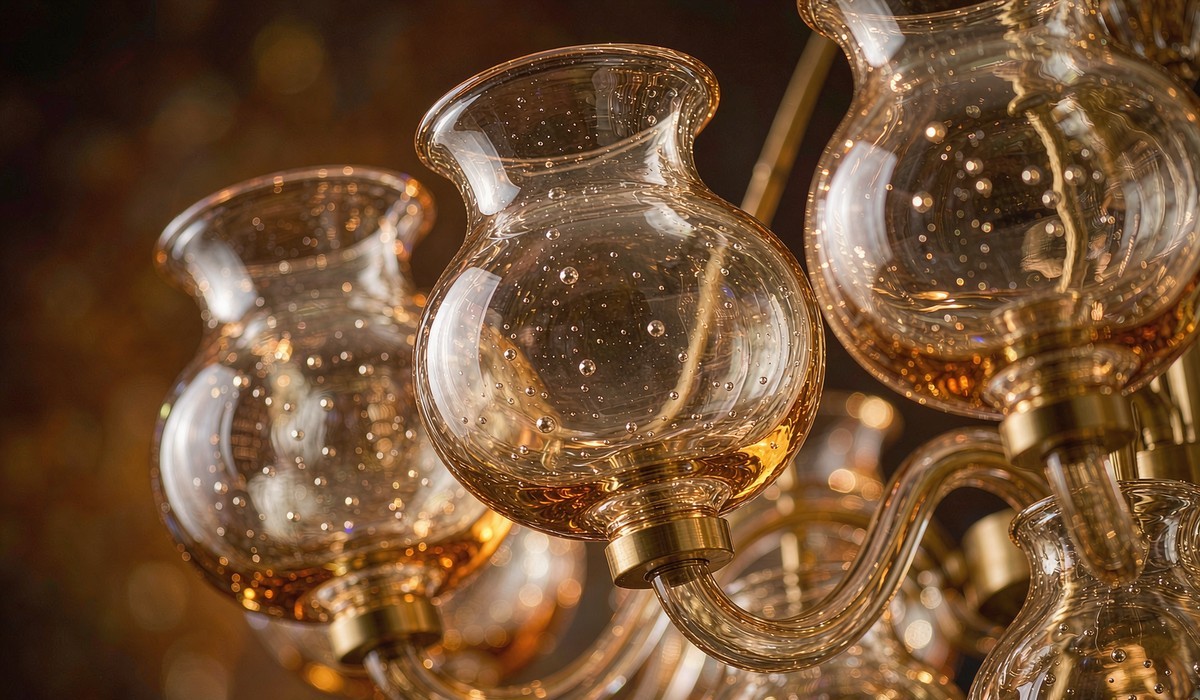
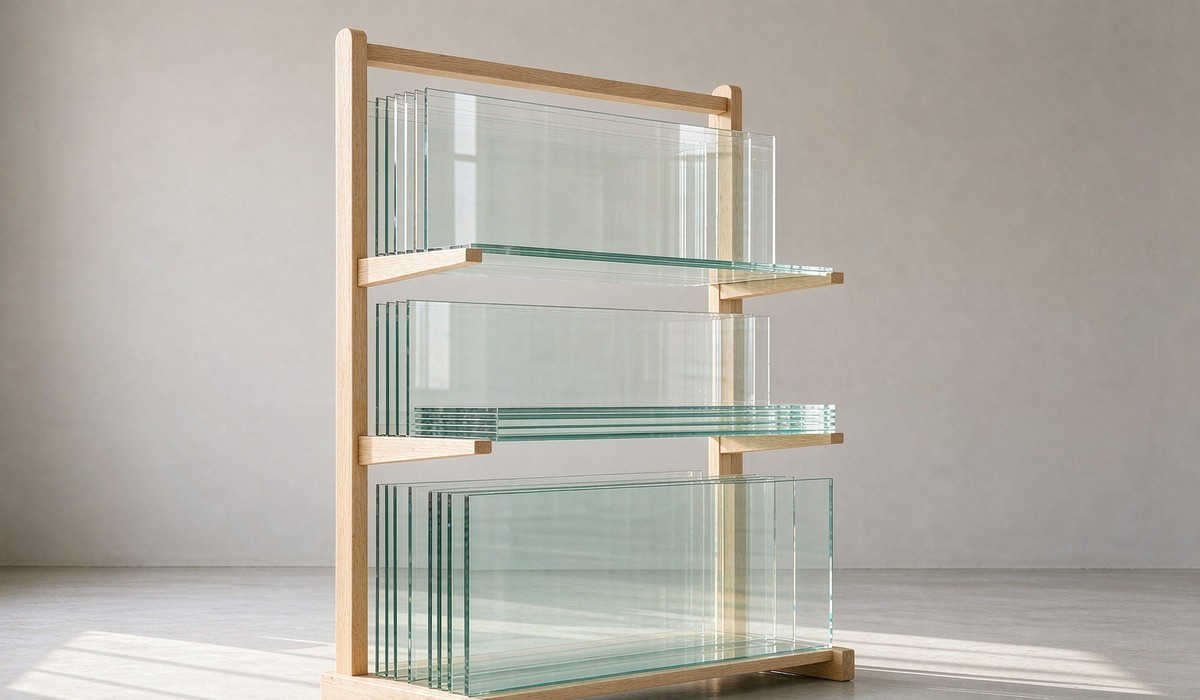
Every hand formed shade begins as flat sheet glass, and selection determines most of what follows. Clear float glass gives crisp refraction, seeded glass adds tiny suspended bubbles for texture, and opal sheets soften diffusion. Thickness matters equally: a four millimetre sheet slumps gently into delicate curves, while heavier stock allows deeper sculptural folds but needs longer firing cycles. Batch samples are inspected for streaks and scratches before approval.
Preparation then converts raw sheet into workable blanks. Sheets are scored and cut to engineered template dimensions, edges are arrised to prevent cracking under heat, and each blank is washed so no dust burns into the surface inside the kiln. For projects with strict colour matching, factories prepare labelled sample sets and obtain designer sign off before cutting the full quantity, protecting both sides from costly rework.
Kiln Slumping Techniques That Shape Sculptural Lighting
Forming happens in a kiln, where each blank rests over a steel or ceramic former and is heated to roughly 750 degrees Celsius. The glass softens and settles into the mould under its own weight, a process known as slumping. The firing schedule runs in stages: a slow ramp to avoid thermal shock, a soak that lets the sheet drape evenly into every curve, and a controlled annealing cool that releases internal stress.
Rushing any stage invites warping, bubbles or hairline fractures that appear weeks later on site. Skilled operators adjust soak times and mould preparation for each design, since shallow leaf curves need gentle sag while deep wave forms require layered moulds and intermediate firings. Modern workshops add CAD models and 3D printed formers to define geometry precisely, keeping large runs repeatable without erasing the slight irregularities that make hand formed glass attractive.

Hand Cutting, Frosting and Surface Finishing Details
Once formed and annealed, elements move to the finishing benches. Hand cutting trims the perimeter to final dimensions and can add facet edges that sparkle under point light sources. Frosting is applied selectively through acid etching or sandblasting with masked zones, so one leaf can shift from full transparency near its fixing point to soft opacity at its tip, controlling glare in a way uniform coatings cannot achieve.
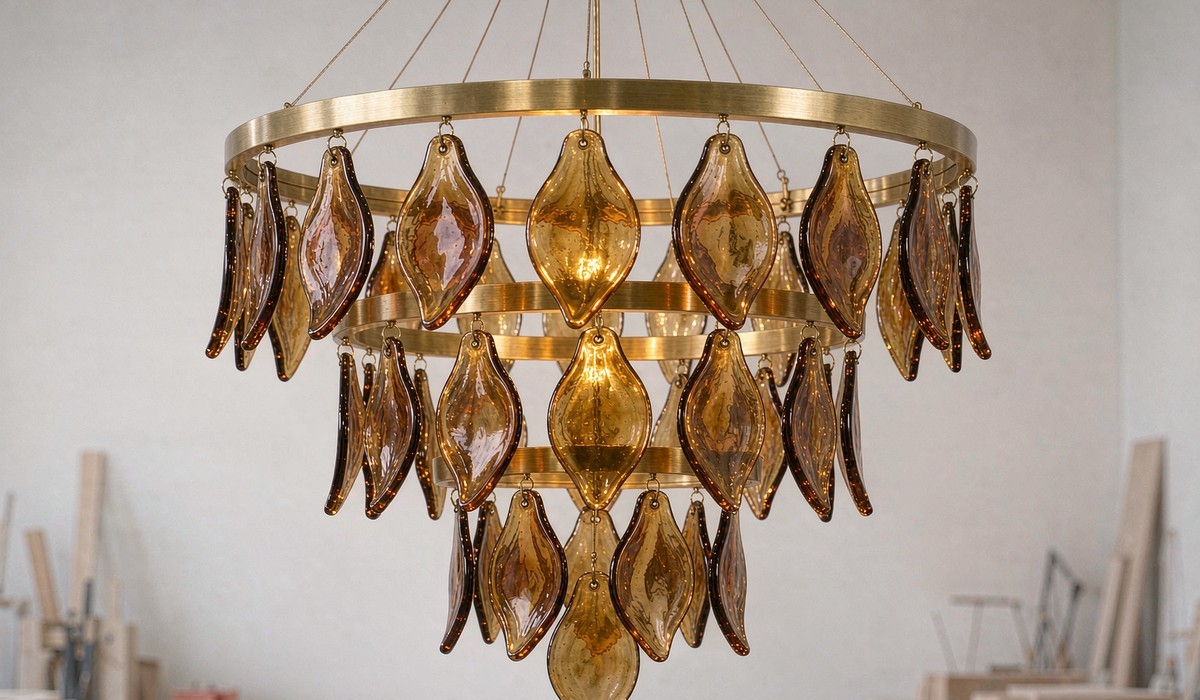
Colour work extends the palette further. Warm amber and champagne tones come from stained overlays or mineral colourants fired into the surface, while gilded or brushed metal rims tie the glass into surrounding brass or stainless framework. Because every operation is performed by hand, inspectors check each piece against the approved master sample for hue, opacity and edge finish before assembly.

Assembly, Stringing and Quality Testing Before Shipment
Assembly turns hundreds of finished components into one installable fixture. Glass elements are strung by hand onto fine suspension wires, crimped individually and arranged in tiers that build the cascading silhouette the designer intended. Load bearing metalwork is engineered separately with calculated hanging points, and long strings carry hidden safety wires so no component can fall even if a fixing fails.
Mock up assembly in the workshop verifies weight distribution and sight lines before packing. Electrical components, lamps, drivers and dimming modules are wired and burned in, with photometric checks confirming colour temperature and output match specification. Each complete unit is lit, inspected and photographed, then packed in export grade crates with pearl cotton and corner guards, arriving on site with drawings and installation guidance.
R&C Deco Lighting is a custom decorative lighting factory based in Zhongshan, China. We manufacture bespoke chandeliers, wall sconces and statement installations for hotels worldwide. Our in-house team manages the full process from design review and prototyping to production, quality control and export packaging, with certifications including ISO 9001, CE, UL, ETL and SAA; MOQ starts at one piece and production takes 35 to 45 days.
If you are a trade customer and interested in R&C products please contact us:
If the lights you are looking for is not on my scope, Need to bespoke design. Please contact our salesman and I will email you back within 24 hours. For further information please email me on: http://www.rcdecolighting.com/contact-us.html or call me on : +86 13822380843
Five Light Spots to Photograph on the Hong Kong Lighting Fair's Opening Day


Follow us
For more information about our non-standard lighting customizations, please contact us, simply fill in your details below and let us keep you up to date with the latest product letters with quotes, news, events and stories.
E-mail:
WhatsApp:
+86 138 2238 0843
Wechat:
+86 130 0550 5776
Address:
5 Xinmao Industrial Avenue, Zhongshan City, Guangdong Province, China
(R&C DECO LIGHTING)
Subscribe the newsletter